

 Posts
Posts


Editor’s note: Read Part II when you’re done, How to Choose a Watch.
No element of men’s style combines fashion and function quite like the wristwatch. Nor does any other male accessory inspire such devotion and interest.
Nevertheless, in recent times there have been those who believed the watch had finally met its demise in the smartphone, and would fade away with other sartorial anachronisms like monocles and sock garters.
And yet the popularity of the wristwatch persists. To understand why, we need to understand the history of this timepiece, how its past continues to inform its present, and why a man might consider wearing a watch in the 21st century.
History of Wristwatches
While the wristwatch has become a men’s style staple around the world, up until the late 19th century it was considered a piece of jewelry exclusively for women. Men preferred the pocket watch. This wasn’t some arbitrary fashion decision based on taste or gender; there was actually a practical reason for men’s preference for one over the other.
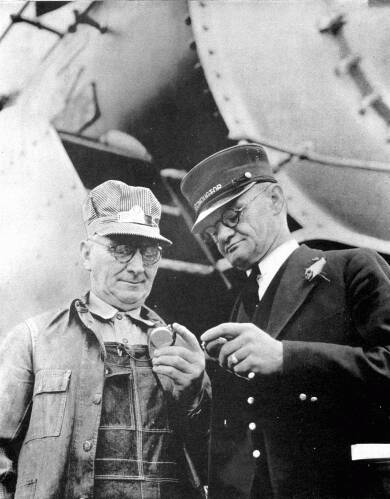
Before the 20th century, watches were extremely susceptible to the elements. Moisture, cold, heat, and dust could easily bungle the intricate gears and springs within a watch, causing it to lose its accuracy. As men were more likely to face these elements, and held positions in the military, business, and government that made accurate timekeeping more of a paramount concern for them than for women, care had to be taken to protect their timepieces and keep themselves on schedule. Function superseded fashion, so into the pocket men’s watches went, only to be taken out when needed.
As with most things in men’s style, it would take a war for patterns to change and for the watch to leave a man’s pocket and be placed on his wrist.
Pocket watches required a free hand to use — you had to reach into your pocket and hold it while you checked the time. In the tumult of battle, a man needed all the hands he could get. So soldiers began improvising wristwatches by strapping their pocket watches on their arm with leather.
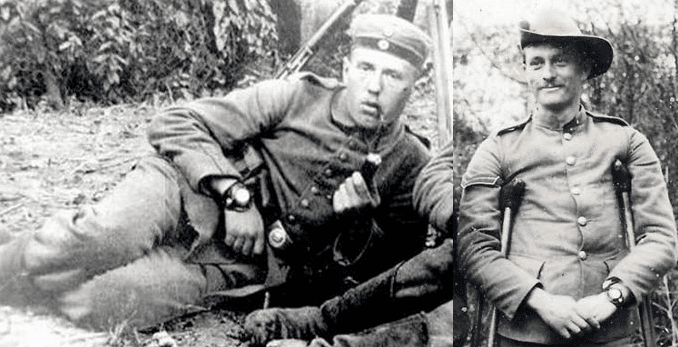 |
| Soldiers wearing a wristlet — a pocket watch secured to a leather strap. |
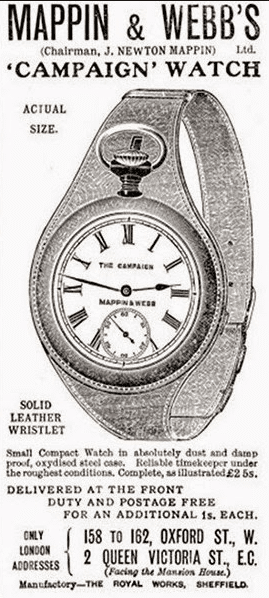
Just as GIs returning from WWII continued to wear their government issued tees and khakis as civilians, veterans of the Burma and Boer Wars likely continued using their leather wristlets when they returned home. Male civilians, seeing these rough and tumble war vets sporting what was once considered a lady’s accouterment, began following suit.
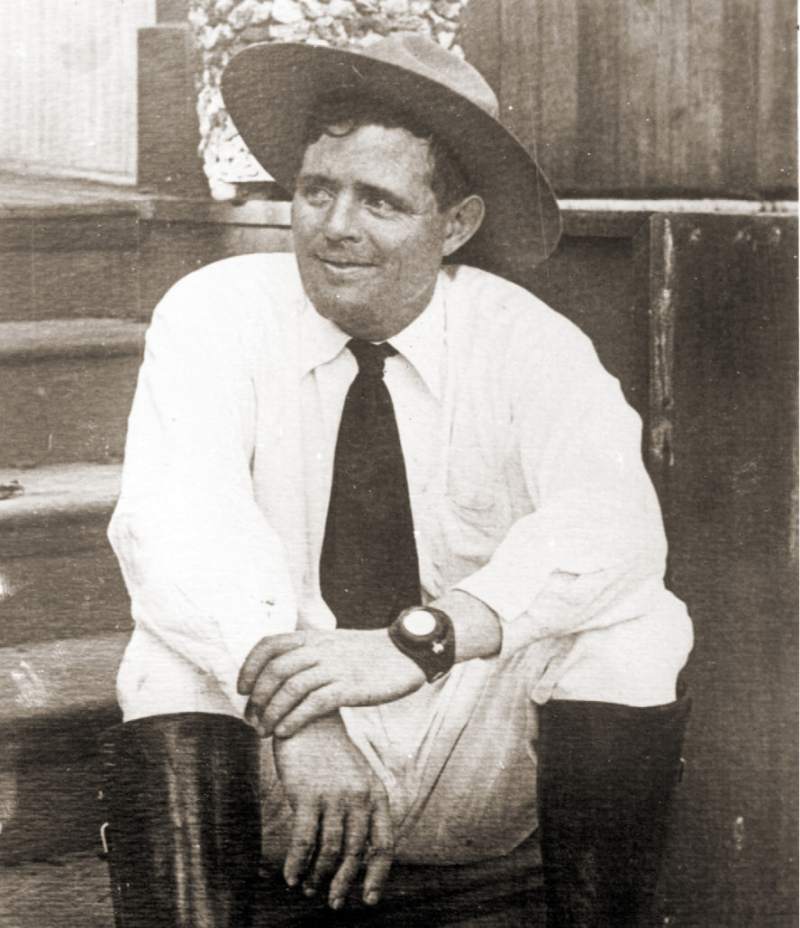 |
| Jack London, author and war correspondent, sporting a pocket watch wristlet on his California ranch. |
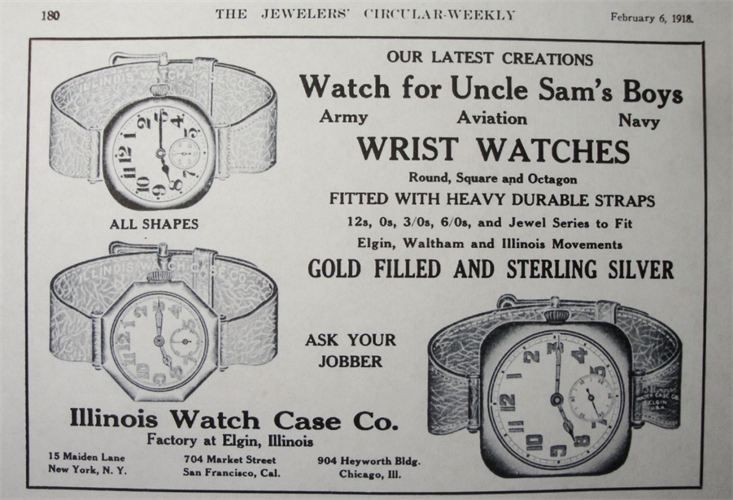
While these manufactures were pioneering a new segment of timepieces, sales weren’t that great. The majority of men still preferred the pocket watch, or the leather pocket watch wristlet.
It would take another war for the watches to find a permanent place on men’s wrists.
World War I ushered in modern, mechanistic warfare, and the wristwatch played a vital role in this process. Before WWI, the coordination and execution of orders relied primarily on visual cues — soldiers would often use semaphore signals to communicate with one another. But because battlefronts were so large during WWI and because soldiers fought in trenches, this visual mode of coordination became increasingly unviable. So clocks began to be used to coordinate attacks: officers would sync watches together at a meeting, return to their respective troops, and initiate the offensive at the agreed upon time.
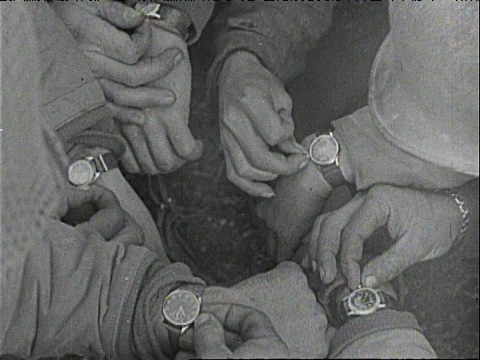 |
| Soldiers syncing their watches during WWII. |
The trench watch wasn’t a government-issued piece of equipment (the pocket watch was still the officially sanctioned timepiece), so if an officer wanted one, he was expected to supply his own. Because there wasn’t a single watch company providing watches to the military, this opened up a vibrant and robust market with several competing companies making trench watches for officers. Consequently, you can still find a wide variety of trench watches from this era on eBay and various other auction sites as well as antique stores.
This wartime competition spurred innovation in the men’s wristwatch. Watch hands and numerals donned luminous paint to make time reading easier in darkened conditions (like at night or in the trenches), and unbreakable crystal glass replaced the glass covering the watch’s face. Lugs for attaching the leather strap to the watch started to be built right into the watch, which gave it a more finished look. Porcelain dials to set the time, which were common on pocket watches, were replaced with metal. Finally, the watch casings were made much tighter to keep water and dust out of the watch’s sensitive mechanisms.
Like the veterans of the Burma and Boer wars who returned home to civilian life burnishing their leather wristlets, British vets of WWI came back home wearing their trench watches, thus setting a standard for civilian men to follow. By 1930, more wristwatches than pocket watches were being sold in the U.K.

The adoption of male wristwatches took hold a little more slowly in the U.S., though. Many American doughboys wore the wristwatch while in the trenches, but went back to the pocket watch after returning home because of the wristwatch’s lingering reputation as a “lady’s timepiece.” The only way an American man could get away with wearing a wristwatch as a civilian was if he was taking part in rugged activity that required chronological precision like flying or racing. It wasn’t until the mid-1920s that wristwatch sales among men began to gain ground, and much later than that that they finally overtook pocket watches.
After WWI solidified the masculine bona fides of the wristwatch, manufacturers began creating timepieces to be worn on all sorts of occasions. Yes, there were fancy dress watches, but most wristwatch innovation was driven by specific needs of men serving in the military and taking part in risky and dangerous activities like car racing and aerial barnstorming.
Why Wear a Watch?
Few men these days need to time the start of a battlefield attack, and technology has come a long way since the Battle of the Somme.
We’ve now entered an age where a man can check the time by pressing a button on his smartphone, which begs an obvious question: “Are there still any reasons to wear a watch?”
It’s a fair question, and wristwatch sales did in fact start declining in the early 00s, thanks in part to the increased use of smartphones. But after reaching an all-time low in 2009, wristwatch sales have been increasing at a steady clip year in and year out and will likely continue that upward trend.
What’s going on there? Every man has his own reasons for sporting a wristwatch, but here are a few as to why you might consider joining their ranks:

Wristwatches are functional and convenient. When I got my first smartphone, I was one of those people who dumped their wristwatch. Why carry an extra piece of equipment, I figured, when there’s a clock built right into my phone?
But after a year, I found myself getting annoyed at having to pull my smartphone out of my pocket whenever I wanted to know the time. I had unwittingly traveled back over a hundred years, burdening myself with the same inconvenience soldiers had discovered during the Burma War; in everything else my smartphone was light years ahead of anything from the early 1900s, but as a timepiece, it was essentially an old fashioned pocket watch.
With a wristwatch, on the other hand, telling the time just requires a glance at your arm, and both of your hands remain completely free and ready for action.
What’s more, with a traditional wristwatch you don’t have to worry about the power going out on your timepiece or recharging it regularly. A quartz watch can go months without a new battery, automatic watches almost never lose power, and a mechanical watch only needs to be wound to keep it ticking — no power plug needed. The power factor is a big reason I dumped the smartwatch (they also don’t look very good) after a few months of use. I had to charge the thing all the time. Ain’t nobody got time for that!
Bottom line: nothing beats a classic wristwatch when it comes to convenient, hands-free, at-the-ready timekeeping.
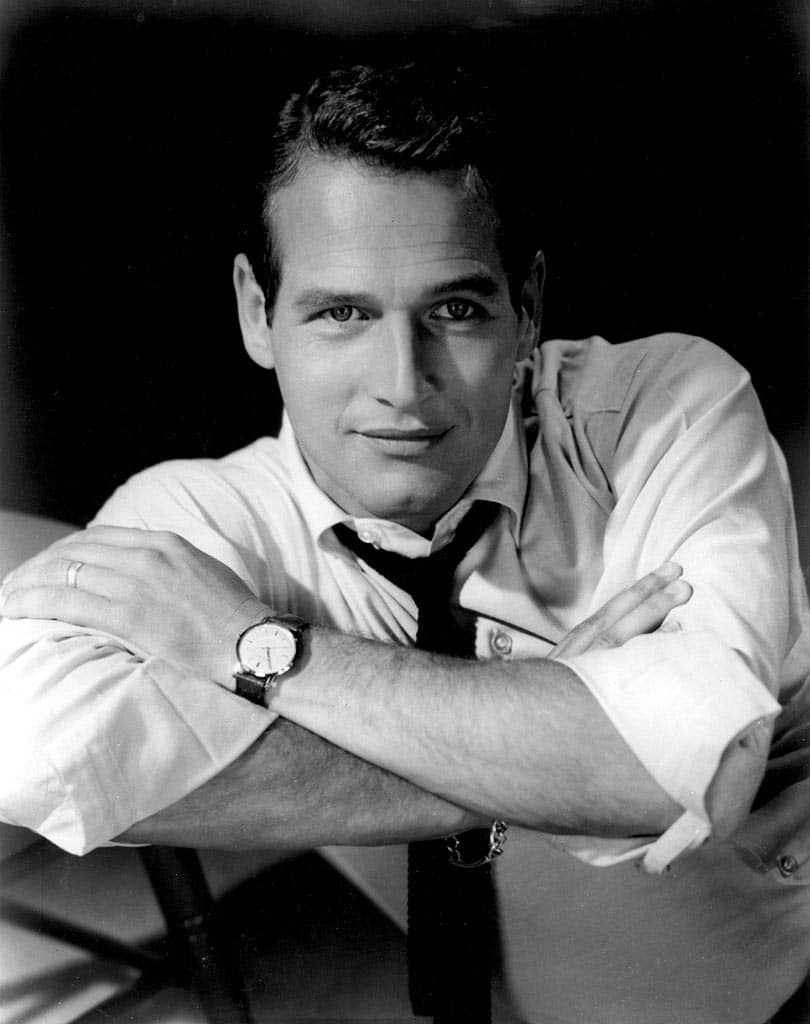
Wristwatches look good. Wristwatches, while functional, are also designed with looks in mind. They’re one of the few pieces of male jewelry that can easily be worn every day.
When matched correctly, a stylish, well-designed watch can add a bit of polish, panache, and visual interest to any outfit. It’s a subtle detail, but people notice it. When I’ve got a solid get-up on and I’m rocking a watch that goes with it, I usually get more compliments on the watch than my clothes.
And the beauty of watches is that because they come in so many varieties, you can develop a collection that you can draw from to put the finishing touch on any ensemble, no matter the occasion. Business formal? Rock your simple, but elegant dress watch. Casual first date? A dive or field watch will look handsome.
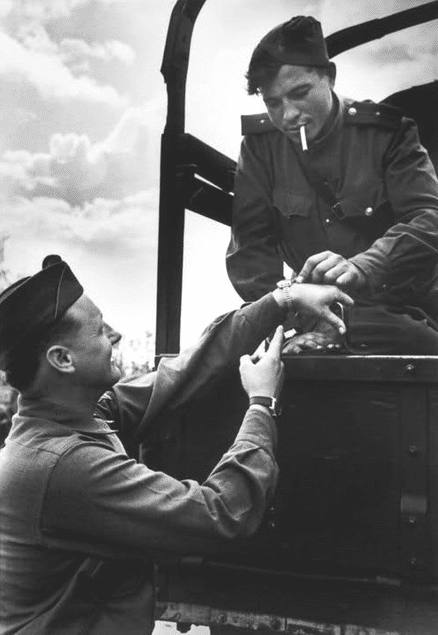
Wristwatches signal status/personality. As we discussed in our series on status, one of the key developments in human development was the adaptation of social signaling. Instead of relying solely on embodied characteristics, like height and physique, to determine status, our human ancestors started using things like clothing and jewelry to size each other up.
When pocket watches came on the scene a few hundred years ago, they quickly catapulted into one of the West’s most powerful social signals. Early watches were expensive, so only the very rich could afford them. Owning one signaled to folks that you had indeed arrived. When pocket watches transformed to wristwatches during the late 19th and early 20th centuries, it was typically high-born British officers wearing them. Even as mass production drove the price of wristwatches down, quality pieces continued to maintain their status signal cache.
Now, the easiest way to signal status with a wristwatch is, of course, to procure the high-end luxury variety. Nothing announces “I’ve made it big” like sporting a $30,000 vintage Rolex.
Yet even if such displays of conspicuous consumption understandably rub you the wrong way, and you opt for something in the far less expensive range, a wristwatch still represents a potent clue to your personality and interests. Fancy yourself a sporty guy? A racing or diving watch can showcase that. Pride yourself on plain practicality? A rugged field watch can convey that.
Yes, watches are about timekeeping, but thanks to their powerful social cache, they can be used to express your values, tastes, and likes to others. Choose wisely.
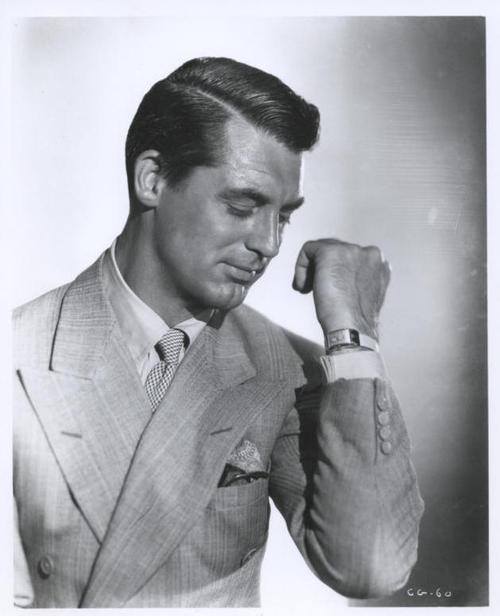
Wristwatches are timeless. While the wristwatch as we know it has only been around for a century, it’s gained a timeless distinction in the world of style. A well-designed classic wristwatch is like a well-designed suit — it will still look good decades from now. There’s a reason 60-year-old Rolexes are still selling for tens of thousands of dollars. Even if a watch costs you a lot, it’s an investment that will continue paying dividends in enjoyed use for years to come.
The timelessness of the wristwatch also makes it a fantastic heirloom. If you’re lucky enough to inherit a watch from your father or grandfather, every time you wear it, you’ll have a tangible reminder of the men who made your life possible. If you don’t have a family heirloom watch, begin the tradition in your own life by acquiring a nice timepiece that you can someday pass on to your son or grandson.
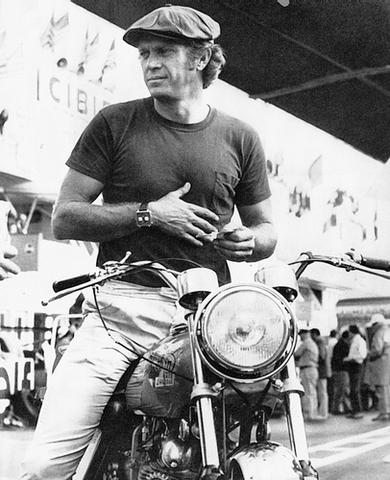
Wristwatches feel good. Wristwatches not only look good, but they feel good too. Because of their historic associations with war and adventurous pursuits like racing, flying, and diving, no male accessory is quite as romantic and evocative as the watch. Not only do these associations signal things to others, but they signal things to yourself as well, about who you’d like to be and what you’d like to be doing. If the watch is an heirloom, it may remind you to carry yourself in a way that would make your forebearers proud.
It may sound silly to think a physical object like a wristwatch could alter your mindset a little, but it’s no different than the totems and talismans our primitive ancestors outfitted themselves with for luck, protection, and courage.
Man has always tried to master the elements, one of the primary ones being time. A watch gives you the sense of being in control of your precious hours and minutes; strap one on and you feel ready for your appointment with destiny. Or at least a meeting or date, which, hey, could very well change the course of your life.
Convinced to become a wristwatch wearer? Next week we’ll present the Ultimate Guide to Wristwatches and lay out everything you need to know about this classic timepiece.
Interesting days
Today - Loosen Up, Lighten Up Day, World Diabetes Day, World Orphans Day, Operating Room Nurse Day, Pickle Day and Spicy Guacamole Day
Tomorrow - Clean Out Your Refrigerator Day, Philanthropy Day, Entrepreneurs' Day and I Love to Write Day
Next Monday - Human-Animal Relationship Awareness Week World Television Day and World Hello Day
December 14 - Monkey Day


