Ever
wonder how Groundhog Day got started, why weddings were traditionally
in June, or why we hold elections in the fall? The timing of present-day
rituals and holidays may be based on the calendars of the ancient Celts
and other cultures! Read this explanation from
The Old Farmer's Almanac.
The
year was divided into four major sections, called quarter days. Then,
each section was divided in half, creating four cross-quarter days.
Together, these made an eight-part year that reflected the natural
procession of the seasons.
The Quarter Days
The days that marked the four major divisions of
the year were called Quarter Days; they originally marked the solstices
and equinoxes, fitting readily into the rhythm of the ways people
farmed. As the 12-month Roman calendar was adopted for both civil and
religious purposes, all of the Celtic days began to conform more closely
with the liturgical year of the Christian church and became identified
with major religious festivals.
[Editors’ note: Historians are
divided as to whether the ancient Celts observed the solstices and
equinoxes (what we call quarter days). Some believe that the Celts
divided the year into just four major sections: Samhain, Imbolc,
Beltane, and Lughnasadh (what we call cross-quarter days). For this
article, we will assume that the ancient Celts observed all eight
divisions of the year.]
March 25, Lady Day
Around the time of the spring equinox, Lady
Day became the traditional day for hiring farm laborers for the planting
and harvesting seasons ahead. (In the church calendar, this day became
the feast of the Angel Gabriel’s annunciation to the Virgin Mary that
she would be the mother of Christ.)
June 24, Midsummer Day
Around the time of the summer solstice,
this day was the midpoint of the growing season, halfway between
planting and harvest. (The English church later celebrated this day as
the birthday of John the Baptist, who foretold the birth of Jesus
exactly six months later.)
September 29, Michaelmas
Around the time of the fall equinox, the
harvest commenced on this day, and there were great fairs and
festivals. This started the custom of early autumnal elections, because
it was a convenient time for people to gather. Elections came to be
shifted to November in the American climate, where the harvest season
was more stretched out.
December 25, Christmas
This observance originated as a winter
solstice festival and celebrated a time of resting and gathering
fertility for a new round of sowing and reaping. The Celtic rituals
merged easily with the Christian celebration of the birth of Jesus. Farm
workers were usually paid for their year’s labor at Christmas, giving
them reason to celebrate and three months rest before the next season.
The Cross-Quarter Days
These days marked the midpoint between a
solstice and equinox. For the ancient Celts, these marked the beginning
of each season, with the major two divisions being winter (Samhain),
starting the dark half of the year, and summer (Beltane), starting the
light half of the year.
February 2, Candlemas
Candlemas acquired its English name from
the candles lit that day in churches to celebrate the presentation of
the Christ Child in the temple of Jerusalem.
Originally, this
day was called Imbolc (lambs’ milk) because the lambing season began. It
was also called Brigantia for the Celtic female deity of light, calling
attention to the Sun’s being halfway on its advance from the winter
solstice to the spring equinox.
Much of this day is grounded in the seasons—estimating how soon spring-like weather will come and when to plant the crops.
- It was not held as a good omen if the day itself was bright and
sunny, for that betokened snow and frost to continue to the hiring of
the laborers 6 weeks later on Lady Day.
- If it was cloudy and dark, warmth and rain would thaw out the fields and have them ready for planting.
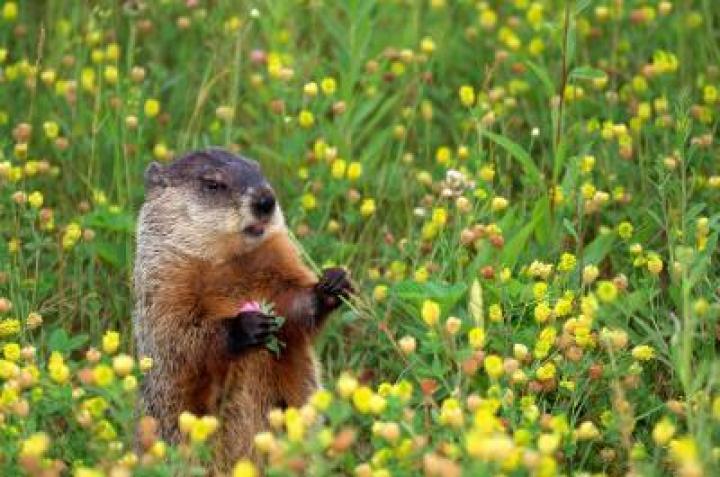
Our Groundhog Day is a remote survivor of that belief. Though we
recognize animal behavior isn’t always the way to judge planting dates,
the tradition continues, often with a wink and a smile.
May 1, May Day
May Day, or Beltane, was the halfway point between
the spring equinox and the summer solstice, and marked the beginning of
summer for the ancient Celts. It was a day for dance and song to hail
the sown fields starting to sprout.
Beltane was a time for the
pairing of young couples, though not yet their wedding, which would not
come until the next Cross-Quarter Day, after three months of seeing how
they suited each other.
Today’s June weddings came from this
tradition; given impatience of the couple, the waiting period came to be
shortened to a six-week span.
August 1, Lughnasadh
Lughnasadh was the wedding of the Sun god Lugh to the Earth goddess, causing the ripening of crops.
- The church transformed it into an offering from the first fruits of
the land; the first loaves baked from the new wheat were offered at the
Loaf Mass, which became corrupted in pronunciation to Lammas.
October 31, Samhain
Samhain (“summer’s end”), or Halloween,
marked the beginning of winter for the ancient Celts, and many
historians believe that it served as the start of the new year in the
Celtic calendar. It was the day when the cattle were brought in from
pasture; those needed for the winter’s supply of meat would be
slaughtered. Since Samhain was the death-night of the old year, it came
to be associated with ghosts and graveyards. It has happier associations
too, such as apple bobbing, which was a form of telling fortunes for
the new year.
We hope you found this history interesting! It’s amazing how today’s holidays reflect the rich fabric of our past.


 Posts
Posts


