Thursday, July 15, 2021

How to Declutter Every Aspect of Your Work Life #TBT

Today's blog post was originally published last year:

Today's blog post is based on a podcast from The Art of Manliness and ties in with similar posts from last week:
When you think about decluttering, you probably think about your home life, and cleaning out your junk drawer and closets. But there are also ways to declutter your work life and tidy up both its physical and digital aspects. 
My guest today explains the art of practicing minimalism in your professional life in a book he co-authored with organizing expert Marie Kondo. His name is Scott Soneshein, he’s a professor of business and management, and his book is Joy at Work. Scott and I begin our conversation by unpacking the benefits of keeping your work life neat and tidy, and then move into how to do this in regards to your physical workspace. Scott shares three questions to ask yourself when you declutter your office to help you decide which items to keep and which to throw away. We also take a useful aside into how to throw away your children’s artwork with less guilt. We then move into how to declutter your digital life by cleaning up your email inbox and smartphone. We end our discussion with several areas you may not think of in terms of clutter, but probably need some tidying up: your activities, decisions, network, and meetings.
Here are the highlights from the podcast:
  • The benefits of keeping your work life tidy 
  • How to prevent tidying from becoming just another procrastination tool
  • Tips for organizing your physical office space 
  • Dealing with kids’ sentimental crafts and artwork 
  • How can you keep paperwork neat and tidy?
  • How has digital clutter changed the tidying game?
  • Managing your overloaded email inbox 
  • What is “activity clutter”?
  • Can you declutter your decisions?
  • How can you tidy your networking?
  • Making meetings better
How overloaded is your email box? Apparently the record is 4.2 million emails! I'm far from that...I have one in my work email box for a blog post idea that I need to forward to my personal email and I have a total of two between all of my personal emails and those are for bills that I need to verify before deleting the emails.

This was an interesting podcast. Go check it out!

Interesting days


Tomorrow - Guinea Pig Appreciation DayCorn Fritters DayFresh Spinach Day and World Snake Day

Week long celebrations:

Jul 17 - Jul 25: Moth Week
Next Thursday - Hammock Day,  Creme Brulee DayMango Day and Penuche Fudge Day

Week long celebrations:
Jul 17 - Jul 25: Moth Week
August 15 - Check The Chip DayRelaxation Day,  Acadian Day and  Lemon Meringue Pie Day

Week long celebrations:
Aug 10 - Aug 16: Afternoon Tea Week

Wednesday, July 14, 2021

Revisiting the Classic Weber Kettle Grill

This is the post I was going to do last week but The Art of Manliness site was down. This is the 3rd of a 3 part series on burgers and grills:

It’s summertime, and that means cookouts.

When it comes to BBQ-ing around here, I’ve been using a gas grill during the 10 years I’ve lived in my house. It’s super convenient. Just turn the knob and light the grill. Bam. Fire.

Creating a three-zone fire on my gas grill is incredibly easy. A few twists of the knobs, and I can have a high-heat zone, medium-heat zone, and low-heat zone at the ready.

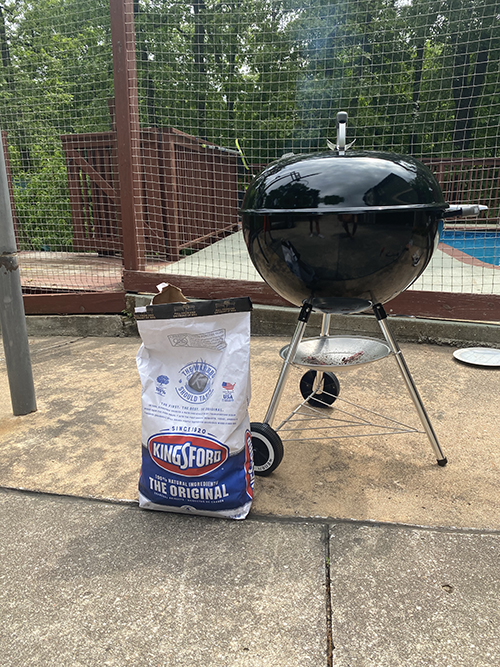
Yet, while I love the convenience of cooking with a gas grill, it does lack a certain charm that I associated with outdoor cooking growing up. Like a lot of American kids, my family had a charcoal-fueled Weber Kettle Grill in the backyard. With its black, porcelain-enameled lid and bowl, this iconic, spherical cooking device was a fixture of my suburban childhood. And getting that baby lit and going was like an ancestral ritual.

To my childhood mind, firing up a Weber charcoal grill had existential significance. It felt like an important, manly task because in my home, like I’m sure in many homes across America, my dad was in charge of it. It all started about an hour before eating time. First, Pops would wheel the grill out to the grass. Then he’d empty out the old ashes into a brown paper sack and hand me the cooking grate to go clean in the laundry room. When I got back, he’d pour a big pile of charcoal into the Weber’s shiny black bowl. Kingsford brand, natch. Then came a spray with some lighter fluid, and the strike and toss of a match.

WHOOSH!!!

After enjoying the sound of a newly birthed charcoal fire, we’d stand around the grill and watch the flame slowly get smaller and smaller, and the charcoal get whiter and whiter.

At a certain moment, Dad would decide that the charcoal was ready for cooking. On would go the grate, and an assortment of burger patties, hot dogs, and sausages were laid upon this culinary altar.

Once the victuals were hot and sizzling, they were eagerly placed inside soft Wonder Bread buns, slathered with ketchup and all the other fixins, and devoured with gusto. Each bite tasted of the charcoal-imparted flavor of smoke. Each bite tasted of summer. At least that’s how I remember it.

The other day as I was cooking burgers in a far more antiseptic fashion on my gas grill, I started waxing nostalgic about these Weber Grill-related memories of mine. I decided I wanted to try cooking on one myself, to see if it was as good as I recalled.
Note: This is NOT a sponsored article. We have no connection with Weber Grill. This is just a heartfelt article from a middle-aged dude waxing nostalgic about childhood summer cookouts where a Weber Kettle Grill took center stage.
How to Use a Weber Kettle Grill

To get reacquainted with the Weber Kettle Grill as a grown man, I first went down to my local Home Depot and bought the classic model for myself. The grill set me back $120. Not bad for something that can provide years of use.

Then, I called my friend and resident AoM meat-cooking consultant, Karl Engel, and asked him to show me the ropes on how to cook with it. Here’s what he taught me.
  • Load Your Charcoal (You Don’t Need as Much as You Think)
  • Light Your Charcoal
  • Make Sure Your Bottom Vents Are Open
  • Wait Until the Charcoal Is Gray/White Before You Start Cooking
  • Put on the Food, and the Lid — or Not
I always used a charcoal chimney...it provided the right amount of charcoal and you didn't need starter fluid...just a wadded up newspaper and a match. And the charcoal burned quickly and evenly.
The Outcome
So did cooking with a Weber Kettle Grill in 2021 match up with my memories of what it was like in 1988?

One thing that I noticed while putting the grill together was that the materials just seemed chintzier and more flimsy than those on the Weber Kettle Grill my dad owned. (Weber grills are still assembled in America, but with some imported components.) The metal in the legs seems to bend pretty easily. The most significant difference that stood out to me was that all the handles on the new models have plastic instead of wood. The wood on the 1970s and 80s versions really classed things up. Oh well. That’s “progress” for ya.

Other than that, everything else was the same. The sound of the fire whooshing. The smell of smoldering charcoal and caramelizing meat.

I gotta say, charcoal definitely makes your burgers taste better than gas. Love that smokey flavor. Our kids rated their charcoal-cooked burgers an enthusiastic 10/10.

Cooking with a Weber Kettle Grill certainly takes more time and attention than using a gas grill. But as with all things in life, that effort transforms the task into more of an experience. I’ll continue to use my gas grill for weeknight dinners, but turn to the Weber when hosting things that I want to feel more like an event. In doing so, hopefully my kids will absorb the same Dad-imbued, charcoal-infused summertime impressions that waft through one’s memory for a lifetime.

Here's a link to part 2 of the series, which has a link to part 1.

Interesting days


Tomorrow - Hot Dog DayGummi Worm DayOrange Chicken DayPet Fire Safety Day and Tapioca Pudding Day

Next Wednesday  - Junk Food Day and Lamington Day

Week long celebrations:

Jul 17 - Jul 25: Moth Week

August 14 - Creamsicle DayTattoo Removal DaySocial Security Day and Garage Sale Day

Week long celebrations:

Aug 10 - Aug 15: Afternoon Tea Week


Monday, July 12, 2021

Your weekend guide to interesting days - July 10, 2021

This week

Sunday - Independence DayIndependence From Meat DayBarbecue DaySpareribs DayCaesar Salad DayBuild A Scarecrow Day and Jackfruit Day


August 7 - Particularly Preposterous Packaging DayAged Care Employee DayDisc Golf DaySandcastle DayProfessional Speakers DayMead DayLighthouse Day and Mustard Day

August 8 - International Cat DayHappiness Happens DayScottish Wildcat DayTop 8 Challenge DayOdie DayBowling Day and Garage Sale Day

August 9 - Melon DayBook Lovers Day and Rice Pudding Day

August 10 - Lazy DayWorld Lion DayVlogging DayS’mores DaySkyscraper Appreciation Day and Duran Duran Appreciation Day

Week long celebrations:

Aug 10 - Aug 15: Afternoon Tea Week


Friday, July 9, 2021

The week in review - July 9, 2021

Monday - "No blog post today" Still celebrating the long weekend.

Tuesday - "The Secrets to Making the Perfect Burger" From The Art of Manliness. "Today's blog post is a follow up to a blog post from last week"

Wednesday - "Just interesting days today" Oops. "I was going to do a post from The Art of Manliness, but the site is apparently down."

Thursday - "This Is What Happens to Your Brain When You Declutter Your Home #TBT" After the past year, many of us could use some decluttering of our home (and our brains). “Studies show that people experience a significant decrease in the stress hormone cortisol when items are removed” 

Interesting days


Thursday, July 8, 2021

This Is What Happens to Your Brain When You Declutter Your Home #TBT

Today's blog post was originally published last year. I actually had a difficult time choosing between this post and another one on wit. Here's the link to the other post if you're curious:

Today's blog post is based on an article from Domino and ties in with yesterday's post on securing your base.

For many of us, decluttering serves as a sort of mental palette cleanser. Stressed out? Tidy your apartment. Unfocused and frazzled? Clear the mess on your desk. Down in the dumps? Reorganize your closet for a sense of accomplishment. 
It turns out there’s plenty of science behind this sentiment. “Our brains can process information more clearly and efficiently in an organized space,” said Manhattan-based psychotherapist Dana Dorfman. “Human beings like to feel in control of themselves and of their surroundings. We prefer predictable environments that provide a sense of stability and calm.”

A deep clean can also help you let go of certain things—a particularly appealing benefit as we stare down 2020. “Possessions represent the emotions or experiences attached to them,” she adds. “A cluttered or disorganized accumulation of possessions may make it difficult to ‘move on’ from the past or live in the present.” 
Whether you’re decluttering to start a new chapter or you simply appreciate an orderly apartment, here’s what you can expect from a mental health perspective.

I'm not one of those people. I never feel the urge to clean or declutter. I'll do it because I have to but it's not something that relaxes me.

So, what kinds of things can we expect from our brains if se declutter our base of operations?

After One Day 
“On day one, people can experience a range of emotions—from overwhelming sadness to relief to invigoration,” notes Dorfman. But no matter what the nature of your project, she adds that you’ll most likely feel energized and motivated as the day progresses. Because organizing involves problem-solving and decision-making, people feel a sense of mastery and accomplishment.

While the presence of a mess may overload all of the senses, it impacts the visual field most significantly. “When the visual field is cluttered, the brain must ‘sift through’ everything and weed out the interfering stimuli,” Dorfman explains. “Studies show that people experience a significant decrease in the stress hormone cortisol when items are removed,” helping you to feel more stable, clearheaded, and relaxed as you clean. 
After One Week 
Believe it or not, you may find yourself looking for your next organizational project after just seven days or so. “System creation can provide ongoing motivation—it builds on itself,” Dorfman notes. “If you design an entryway space equipped with a place for your coat, keys, and bag, you’ve mitigated future misplacements. The sense of mastery and competence prompts the mind to want more.”

With that said, your new lifestyle may take some getting used to, both on a personal and practical level. It can take time for the brain to adapt to a fresh environment and you just might forget where certain items are, for example. But there are additional benefits: “This change may require an updating of one’s self-narrative,” adds Dorfman. “If you’ve always identified as a ‘messy’ person, you may view your habits and capabilities in a new light.” 
After Three Months 
In addition to feeling less stressed, less overwhelmed, and more in control, sticking to an organizational system may lead to newfound feelings of capability and empowerment. “Conquering a procrastinated task like cleaning may remind a person that the anticipation is usually worse than the reality,” explains Dorfman. “This realization and resulting sense of competence can flow into other areas of your life.”

Above all else, most research indicates that it is simply beneficial to live in a consistently neat and organized space. Any steps you take toward curating a healthy environment for yourself are well worth the effort. That’s one compelling reason to do a deep clean and donate unwanted items before the year’s end.

After starting to re-read "Fempowerment" and "The James Bond Lifestyle" (see yesterday's blog post to find out more about them) I'm ready to clean and secure my base!

I didn't secure my base last year, so I'm going give it a shot this year,

Interesting days


Tomorrow - Kebab Day and Sugar Cookie Day

Week long celebrations:

Jul 5- Jul 11: Great British Pea Week

Next Thursday - Hot Dog DayGummi Worm DayOrange Chicken DayPet Fire Safety Day and Tapioca Pudding Day

August 8 - International Cat DayHappiness Happens DayScottish Wildcat DayTop 8 Challenge DayOdie DayBowling Day and Garage Sale Day

Tuesday, July 6, 2021

The Secrets to Making the Perfect Burger

Today's blog post is a follow up to a blog post from last week and is based on a podcast from The Art of Manliness:

When Chris Kronner took his first head chef position at an upscale restaurant, he inherited a menu which featured a popular burger. At first he resented having to hold onto it. But then he began to wonder, and be captured by, how he might experiment with and elevate this sandwich standby. Thus began a decade-long obsession with creating the perfect, mouth-wateringly tasty burger.

In his new book, A Burger to Believe In: Recipes and Fundamentals, Chris shares how he turned what he learned in his quixotic quest into the Bay Area’s famous Kronnerburger, as well as accessible tips that can be used by the average backyard chef to level up their burger game. Chris shares some of those tips today on the show, beginning with the best kind of beef chuck to use in your burgers and why the method you use to cook your burgers should vary depending on their fat content. We then get into why Chris likes to use dry aged beef in his burgers, and how you can make your own in the kind of mini fridge you’d keep in a dorm room. From there we delve into the optimal size and shape of the patty, Chris’ surprising pick for buns, the ideal proportionality of toppings, and Chris’ take on the desirability of putting ketchup on your burger. We also get into our mutually conflicted feelings about pairing one’s burger with French fries, and, if you need to get your burger fix on the run, what fast food chain Chris thinks has the best burgers.

Here are the highlights of the program:

  • Why are Americans so attached to the hamburger?
  • Chris’s go-to meat from the meat counter 
  • How should you grill your burger?
  • Why does Chris use dry-aged beef in his burgers?
  • Where do people go wrong with patty shape and size?
  • The only seasoning you need when grilling 
  • Chris’s cheese of choice + other toppings 
  • The condiment that shouldn’t go on a burger 
  • What about side dishes? 
  • What’s the best fast food burger?

Interesting days